2 hr
Ma'alaea Harbor Humpback Whale Watching Catamaran Cruise
- Entry ticket
- Mobile voucher
- Valid same day
- Free cancellation
Hawaii Whale Watching — Reserve Your Humpback Season Experience
Morning departures when the ocean stills, humpbacks breach against volcanic slopes
Compare fares, pick the fit — all bookings are mobile-voucher and eligible for free cancellation where shown.
2 hr
2 hr 30 min
2 hr
| Experience | Duration | Rating | Skip-the-line | Guide | Small group | Free cancel. | Price | |
|---|---|---|---|---|---|---|---|---|
|
Standard Entry
Most popular
Ma'alaea Harbor Humpback Whale Watching Catamaran Cruise
|
2 hr | ★ 4.6 | — | ✓ | — | ✓ | €43 | Book → |
|
Standard Entry
Big Island Humpback Whale Watching Expedition
|
2 hr 30 min | ★ 4.8 | — | — | — | ✓ | €99 | Book → |
|
Guided Experience
Small Group Humpback Whale Watching Experience
|
2 hr | ★ 4.9 | ✓ | ✓ | ✓ | ✓ | €63 | Book → |
They complement each other; most visitors who do both call commercial boat excursions the more thrilling hawaii whale watching experience. Shoreline observation offers a peaceful perspective, while boat trips provide close proximity to humpback whales.
|
Top pick Public Shoreline |
Commercial Boat Tours | |
|---|---|---|
| Cost | 0 USD | 100–250 USD per person |
| Viewpoint Accessibility | High (land-based paths) | Limited (requires boarding vessel) |
| Closeness to Whales | Distanced (telephoto required) | High (vessel proximity) |
| Need for Equipment | Binoculars recommended | None (direct sight) |
| Crowd Levels | Low to moderate | High (capacity limits) |
| Mobility | High (walk-up access) | Low (requires scheduled departure) |
| See tickets & prices |
Verdict: Choose public shorelines for flexible, low-cost sightings using hawaii whale watching tickets, or select a hawaii whale watching tour for specialized marine mammal encounters.
Hand-picked experiences loved by thousands of travelers
2 hours
Free Cancellation
Set sail from Kaanapali Beach to witness majestic humpback whales breaching in Hawaiian waters
1.5 - 2 hours
Free Cancellation
Experience majestic humpback whales in Maui's protected sanctuary aboard a custom inflatable raft
2 hours
Free Cancellation
Observe humpback whales with certified Marine Naturalists on Maui's conservation-focused ocean adventure
2 hours
Free Cancellation
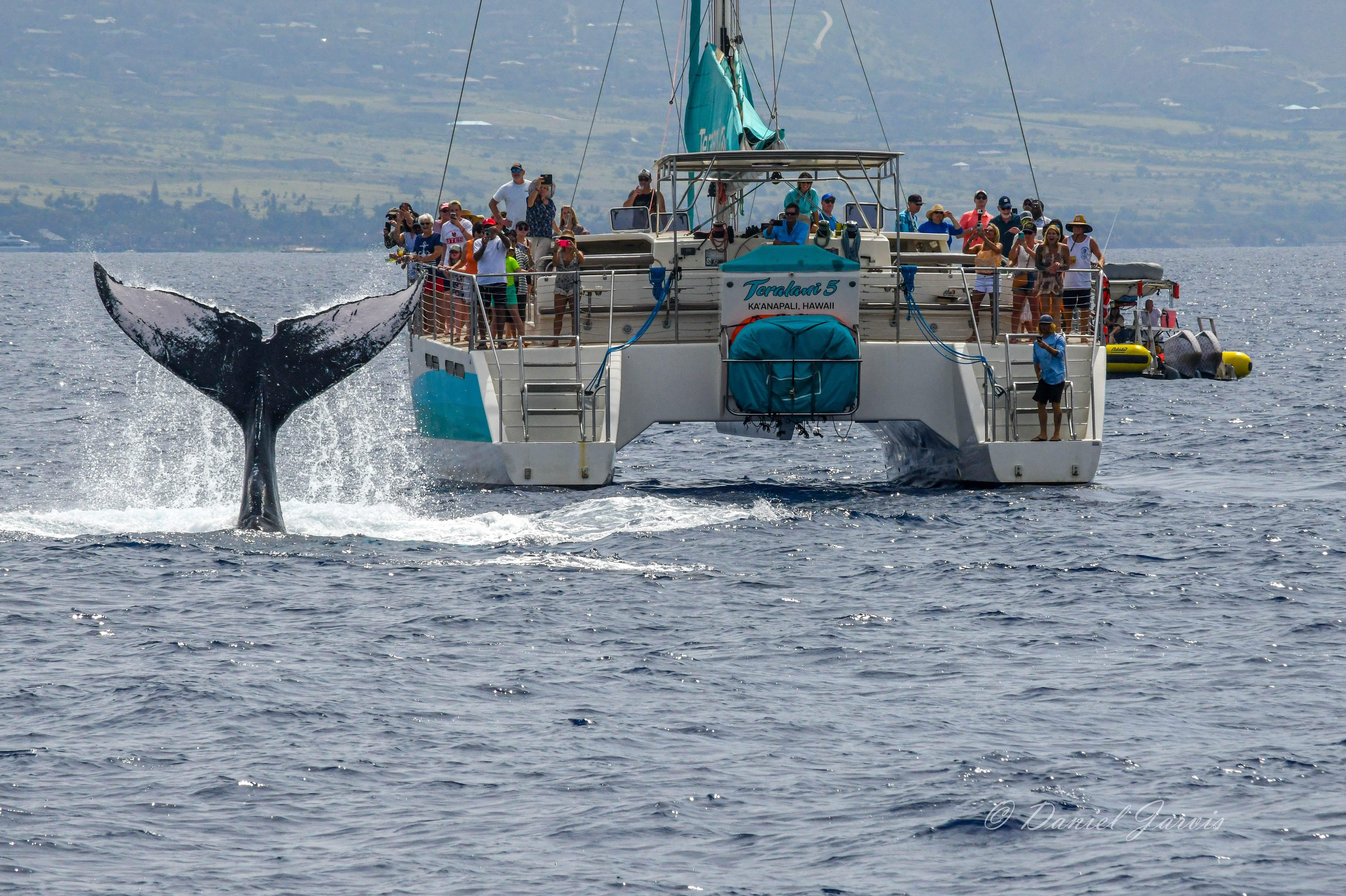
Watch majestic humpback whales from a spacious catamaran, boarding directly from Ka'anapali Beach.
3 hours
Free Cancellation
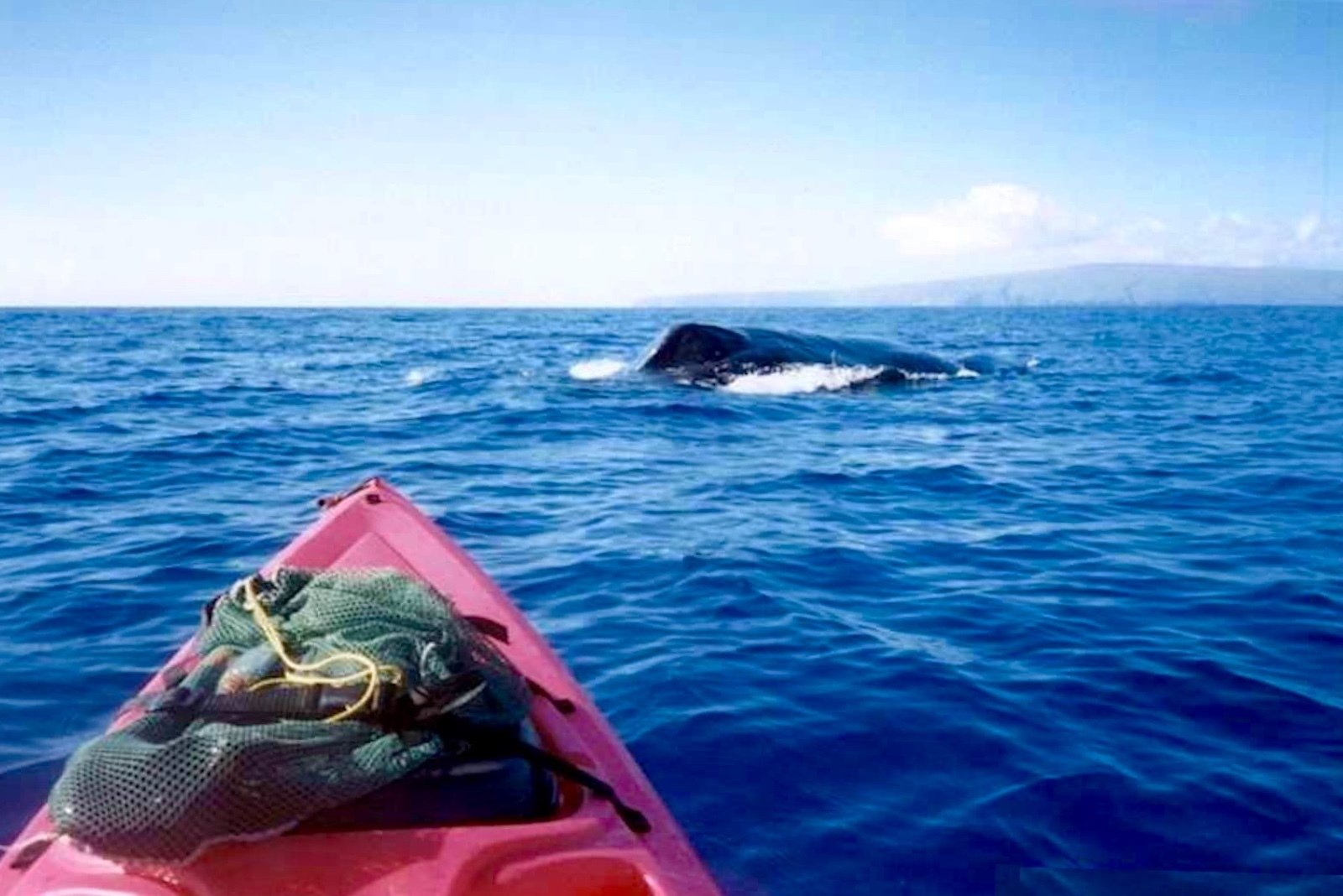
Paddle alongside majestic whales, then snorkel among green sea turtles on this ocean kayaking journey
2 hours
Free Cancellation
Witness humpback whales along Oahu's stunning coast with guaranteed sightings or a complimentary return trip
1.5 hours
Free Cancellation
Set sail to observe majestic humpback whales during their annual Hawaiian migration season
Learn about migration at the sanctuary.
Watch for activity from coastal points.
Take a boat into the sanctuary waters.
Features exhibits on whale biology and the local marine environment with beachfront views.
The protected shallow area where thousands of whales migrate each winter to breed and nurse.
A specialized resource within the center for those wanting to dive deeper into humpback research.
Weekly talks provided by experts help explain the annual North Pacific migration patterns.
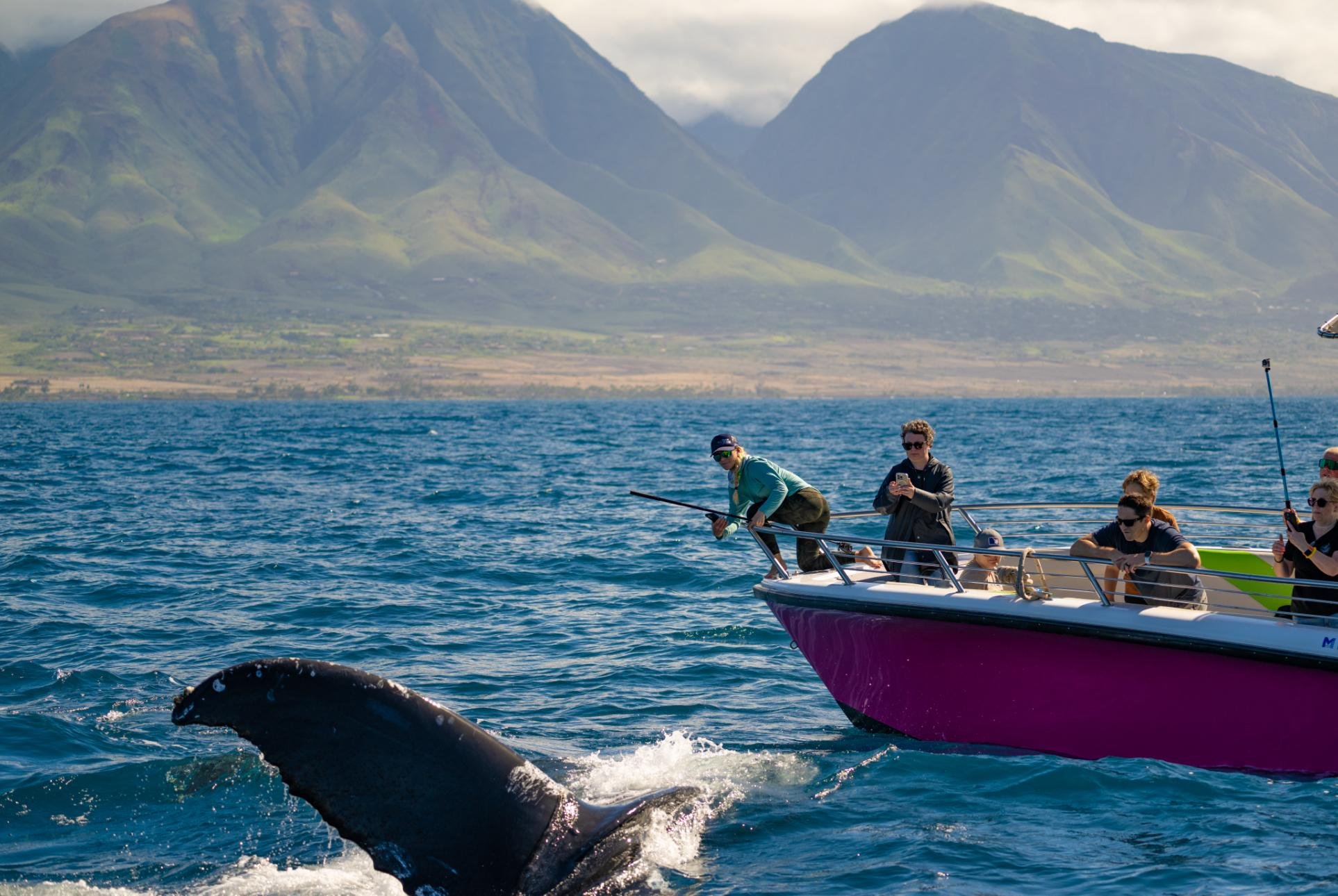
You arrive at the harbor before first light, when the water lies flat and the air carries salt and plumeria. The boat clears the breakwater at 7:00 AM, diesel engines giving way to the low hum of patrol speed as you enter sanctuary waters.
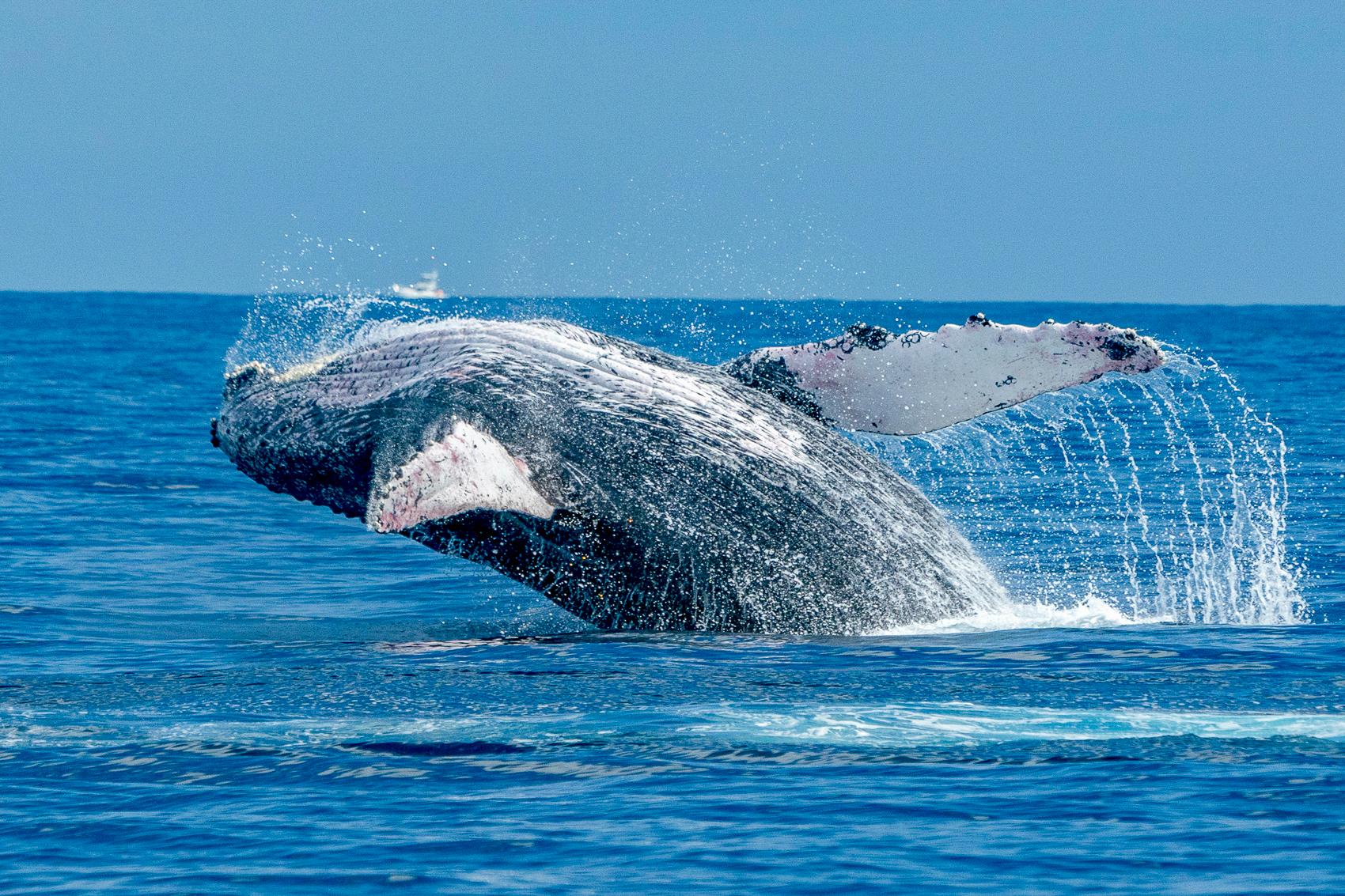
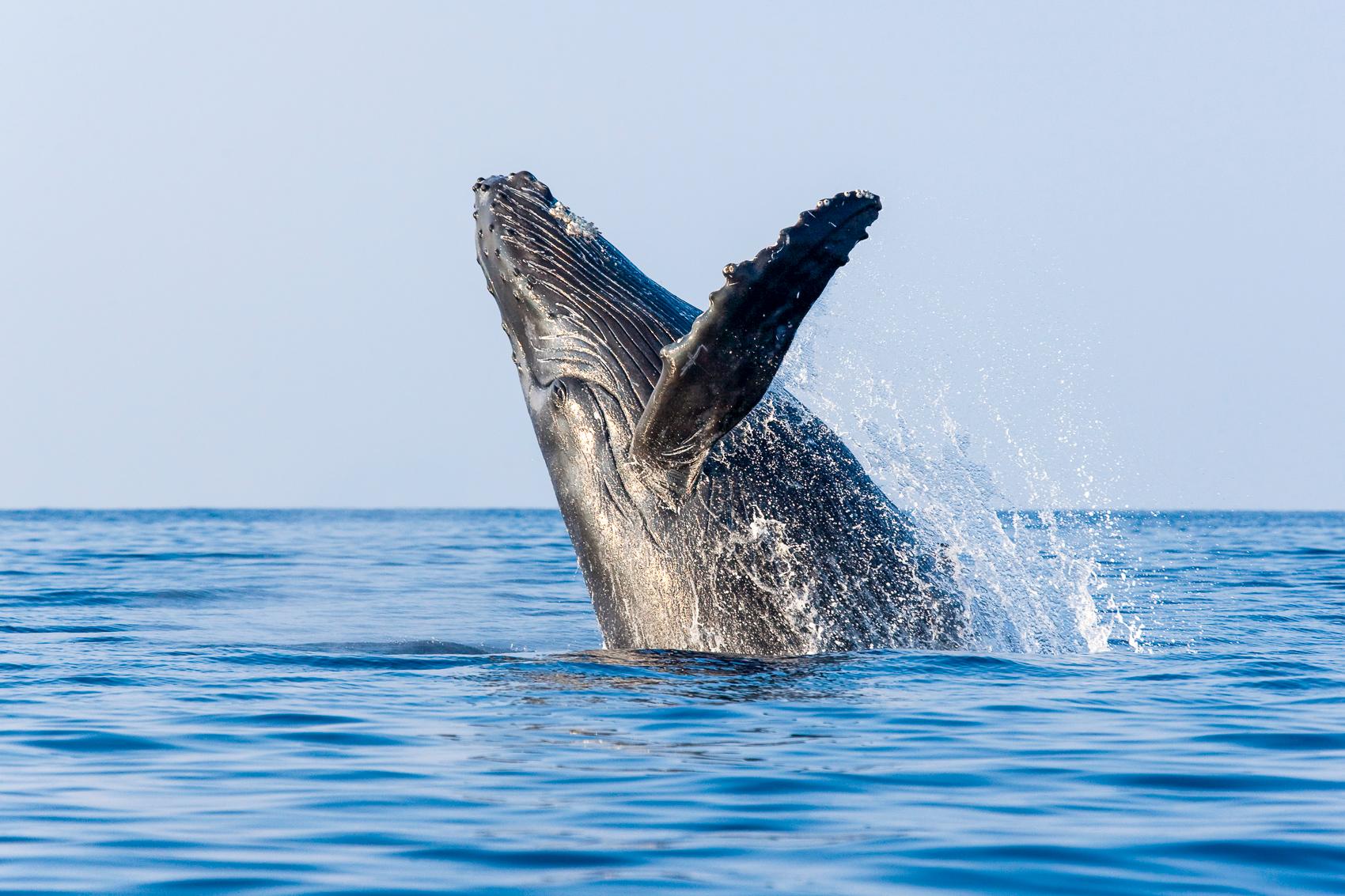
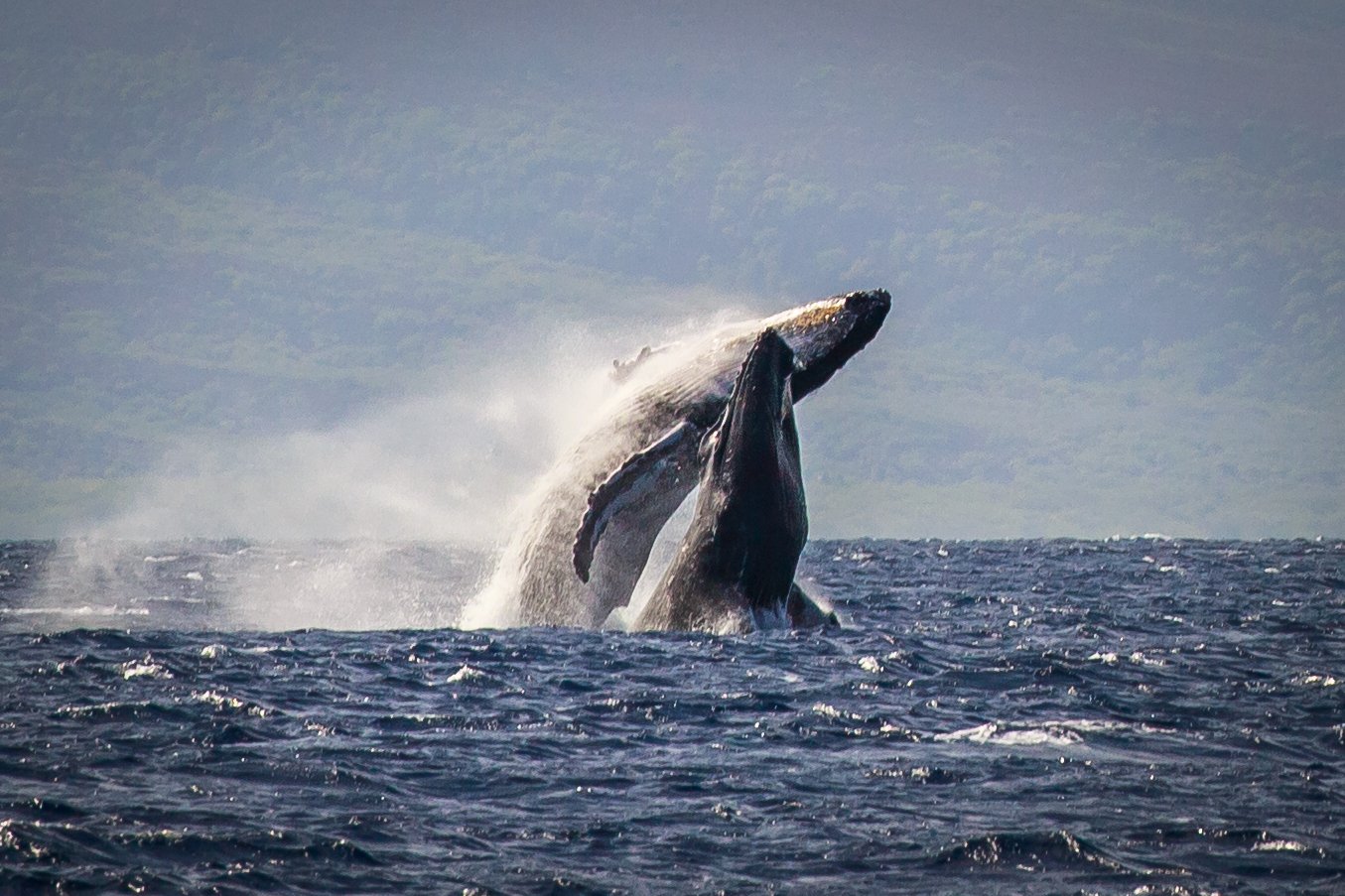
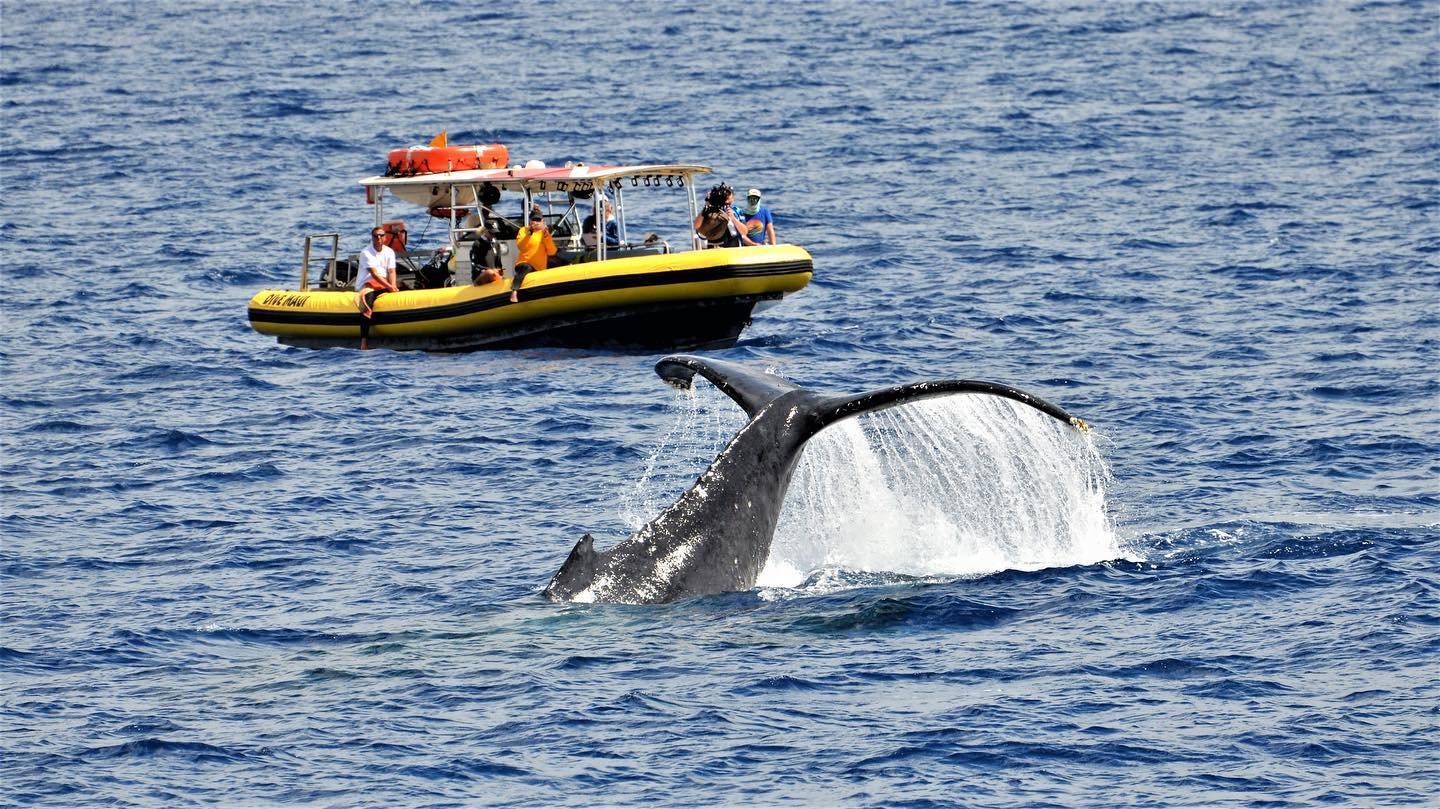
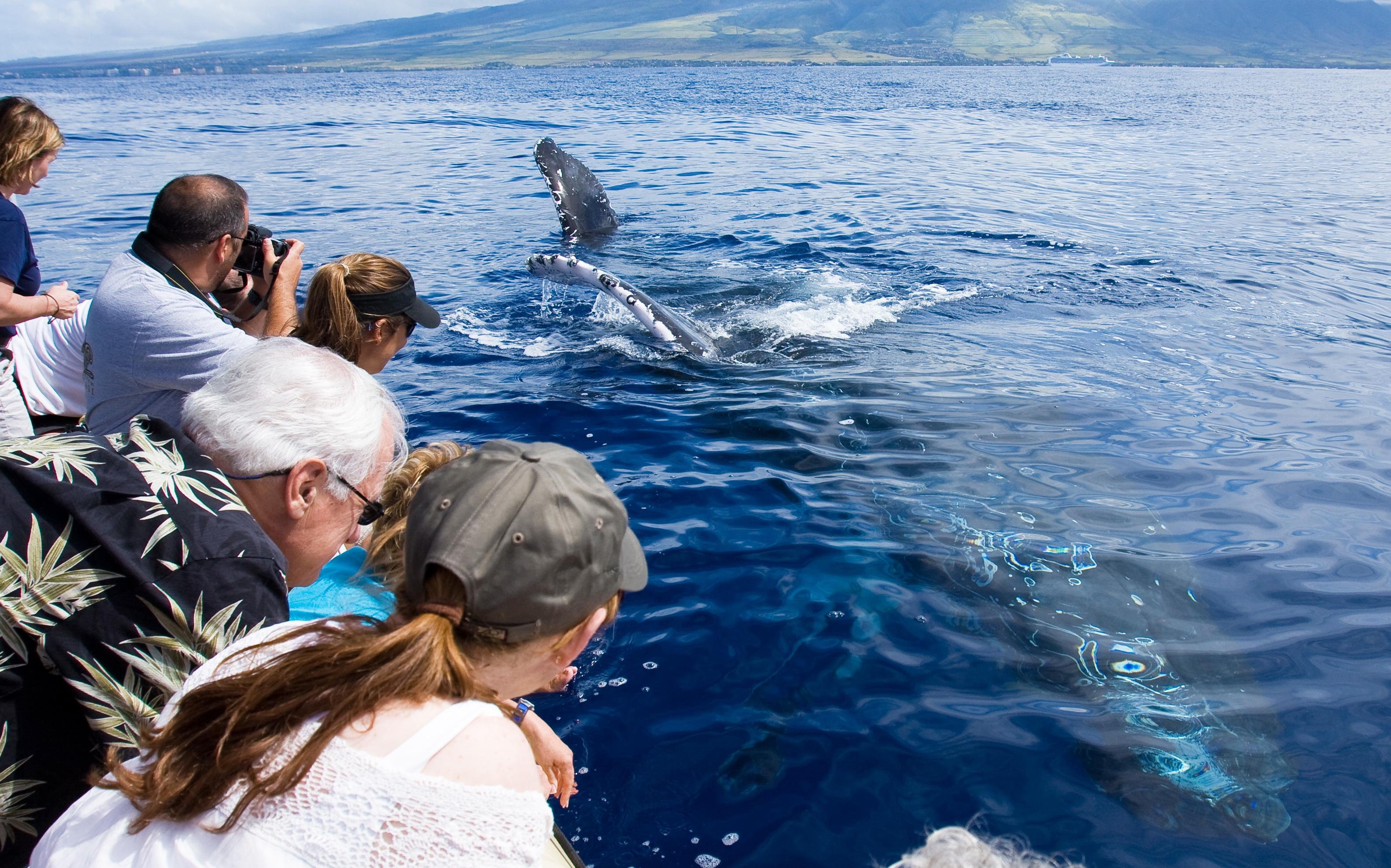
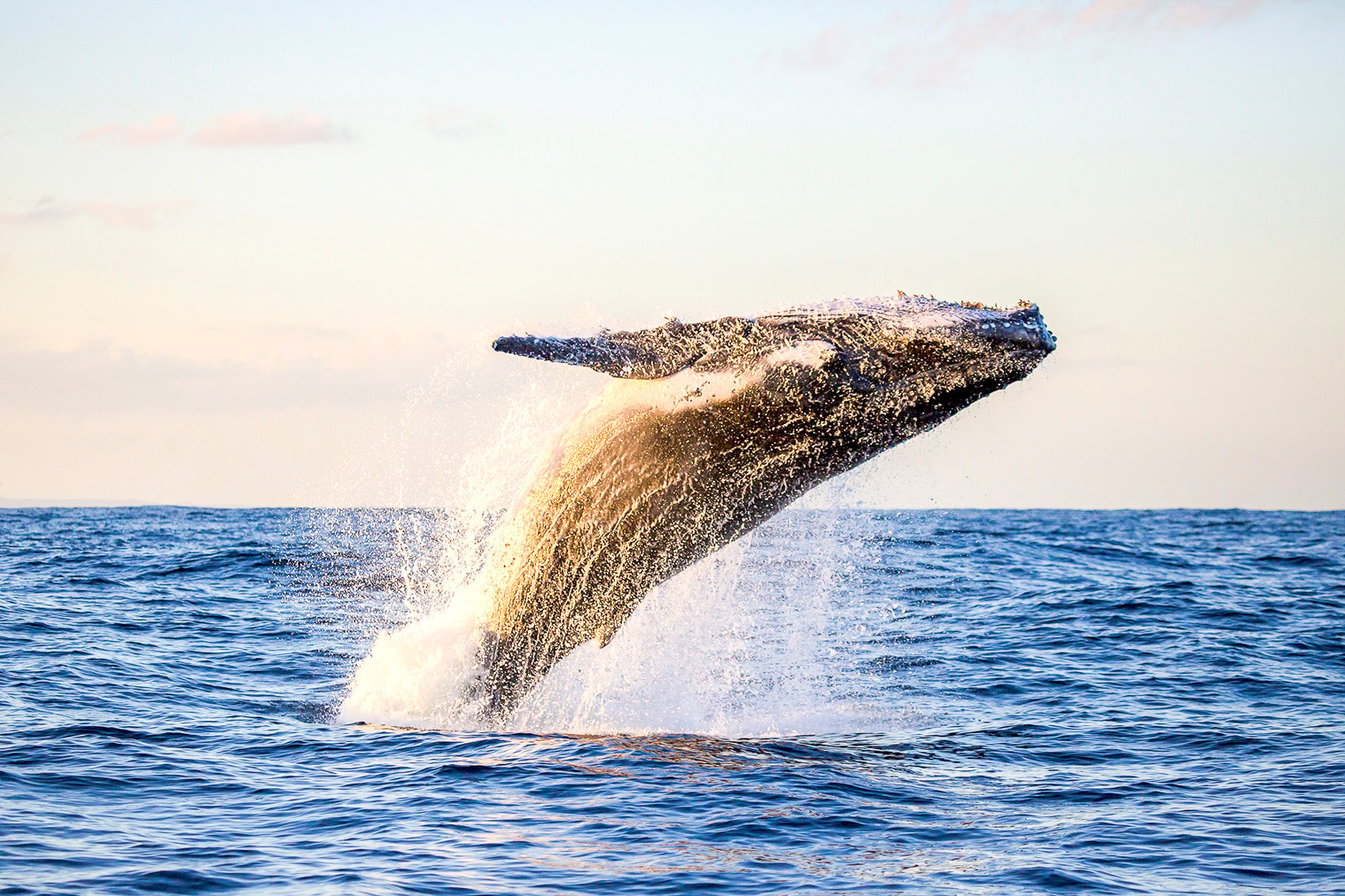
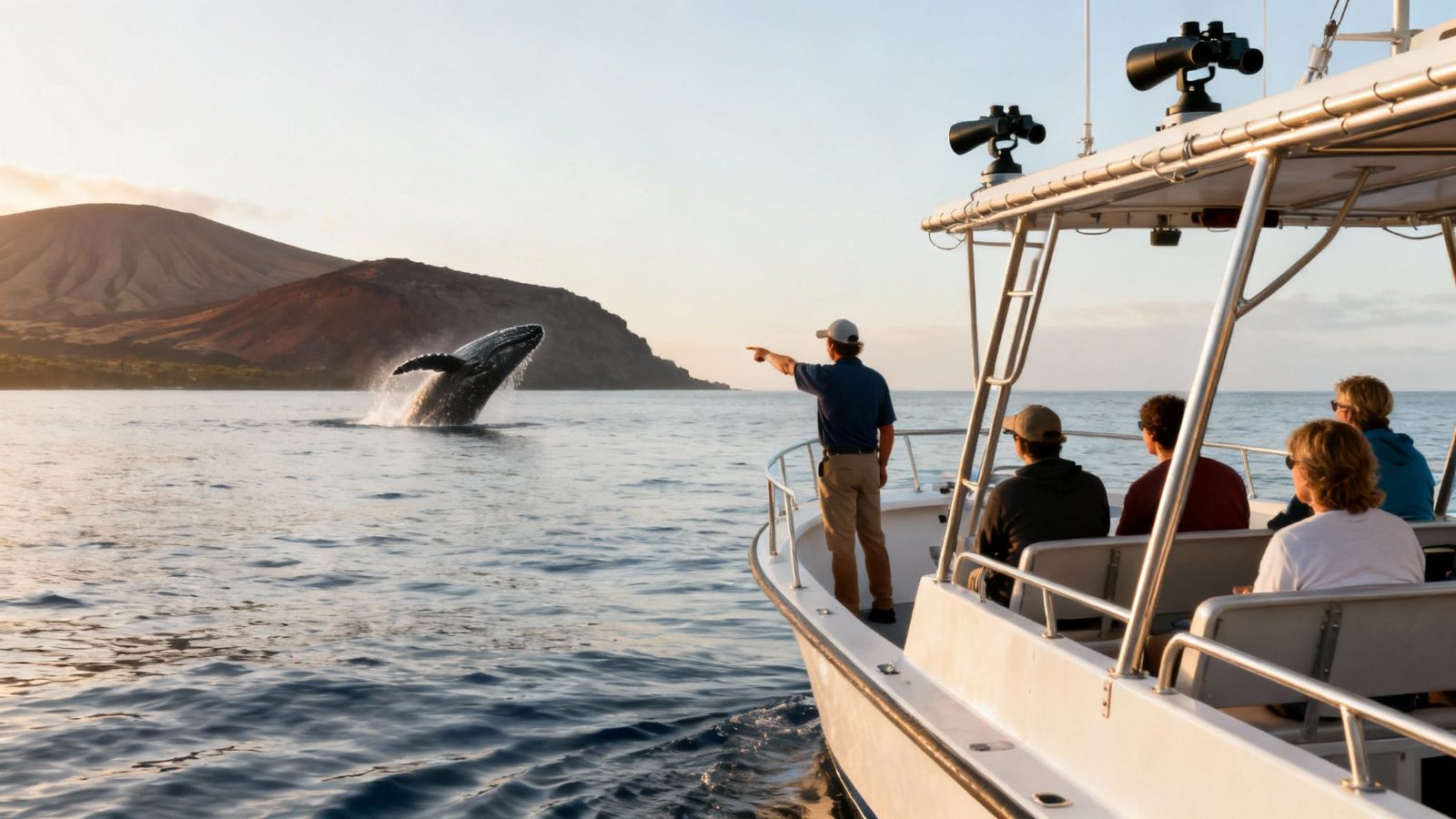
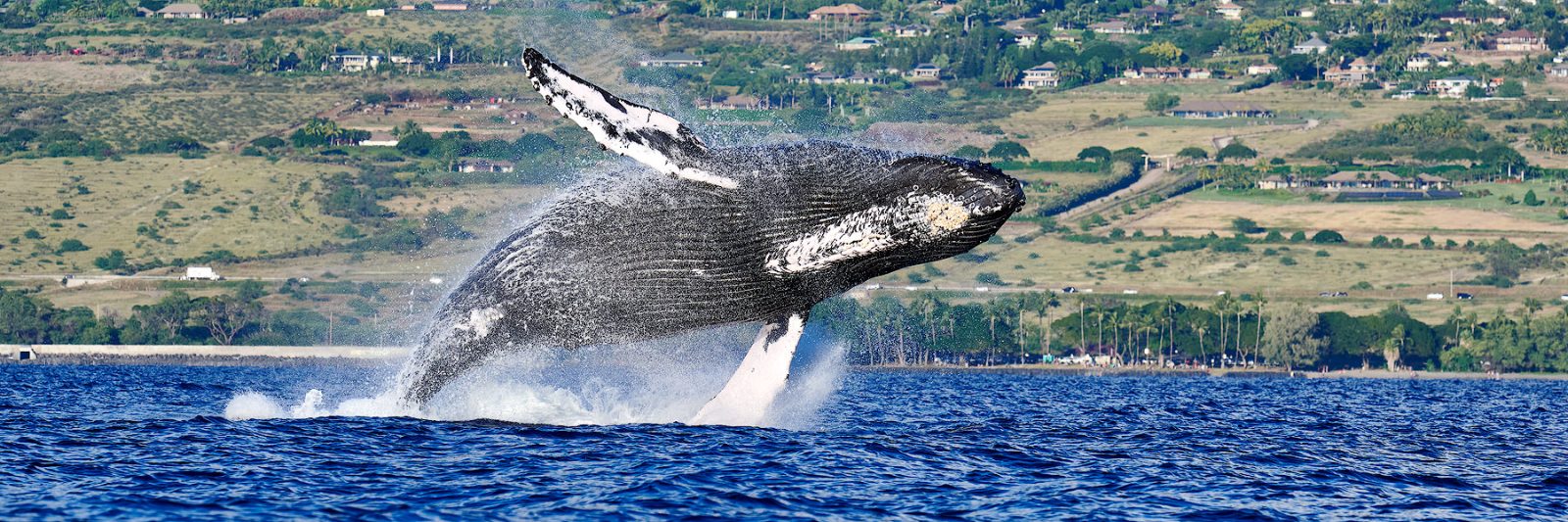
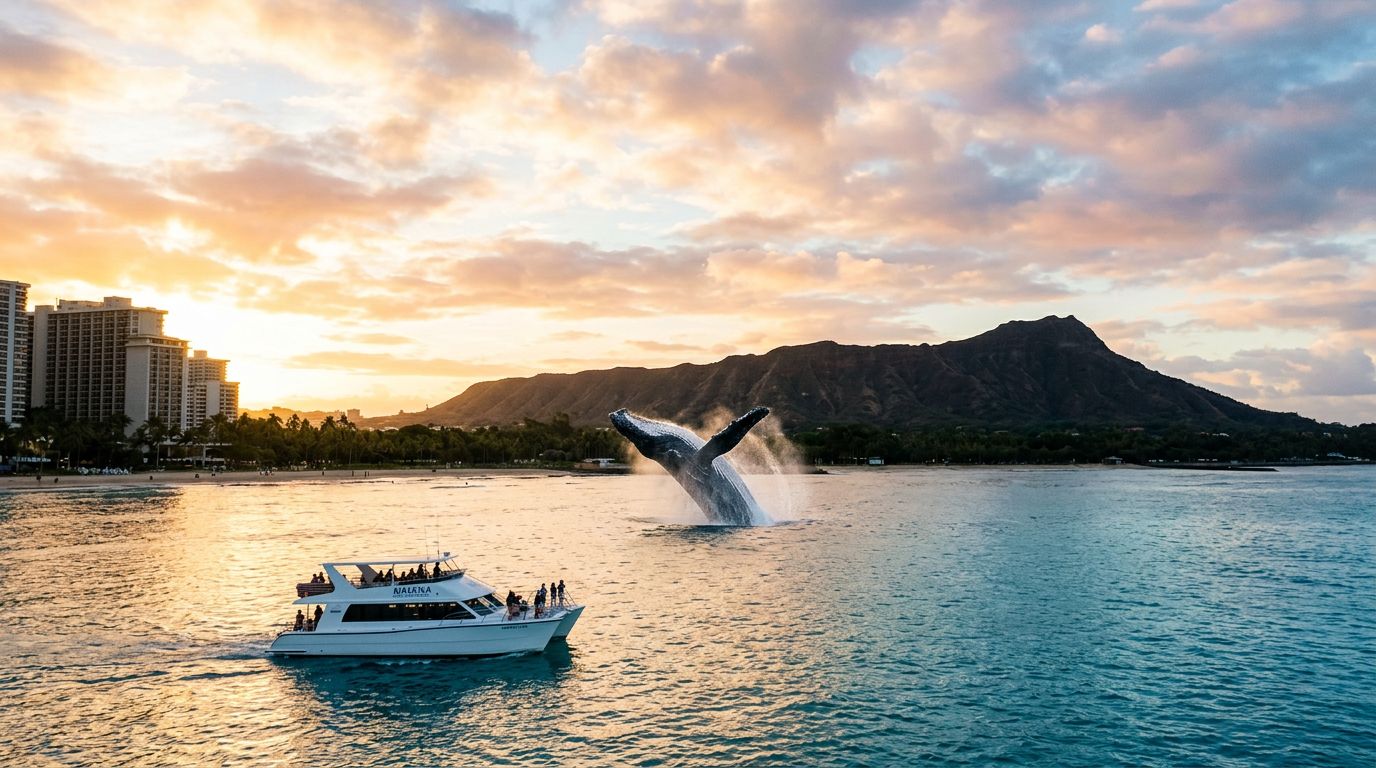
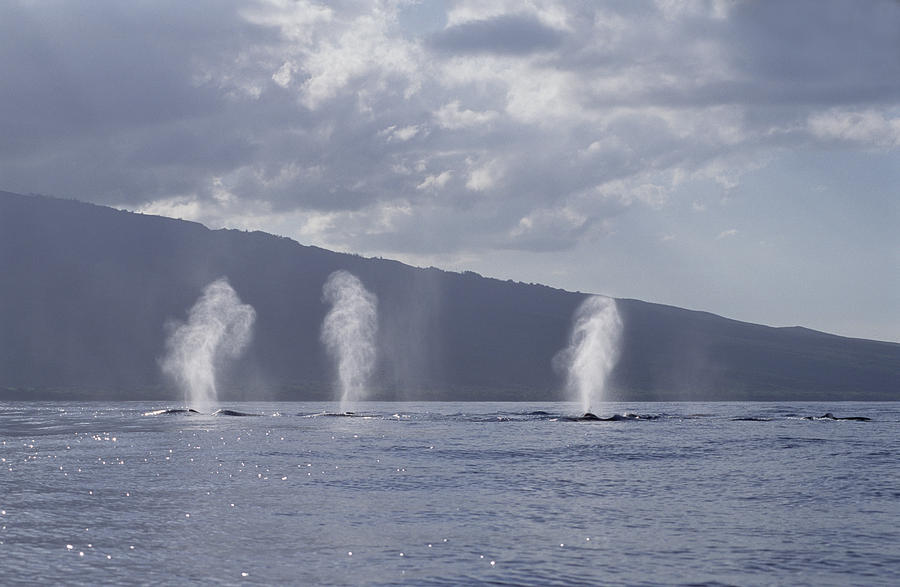
Within twenty minutes, a distant blow catches the naturalist's eye — a vertical mist column backlit by sunrise. The captain cuts the engine 150 yards out, and you drift. The humpback surfaces twice more, dorsal fin slicing the glassy surface, before its fluke rises in a slow arc and disappears. You wait. Then the ocean erupts thirty feet off the bow as a 45-foot male launches skyward, barnacled chin thrust forward, pectoral fins spread wide. The impact sends a wave that rocks the boat and silences every passenger.
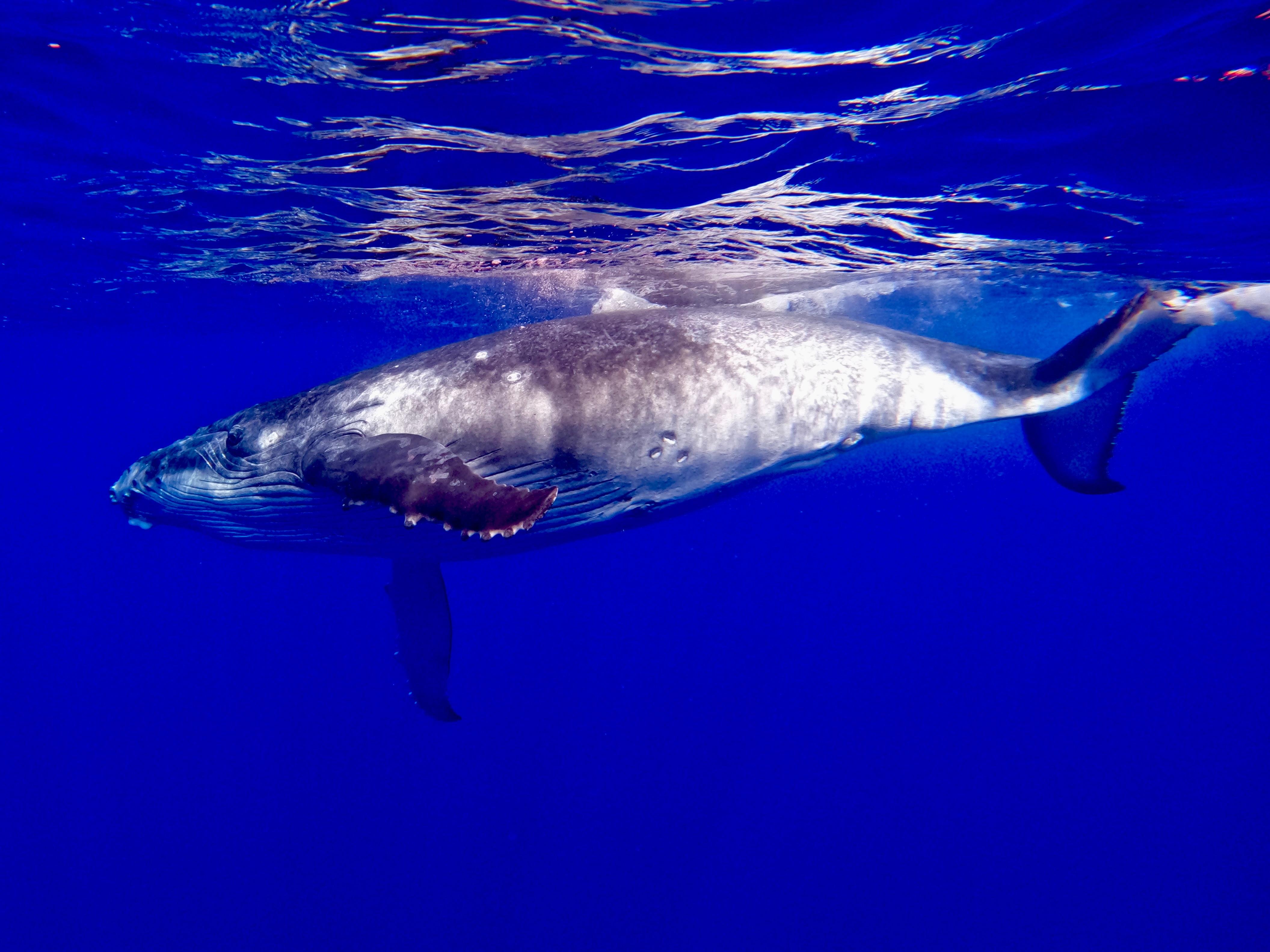
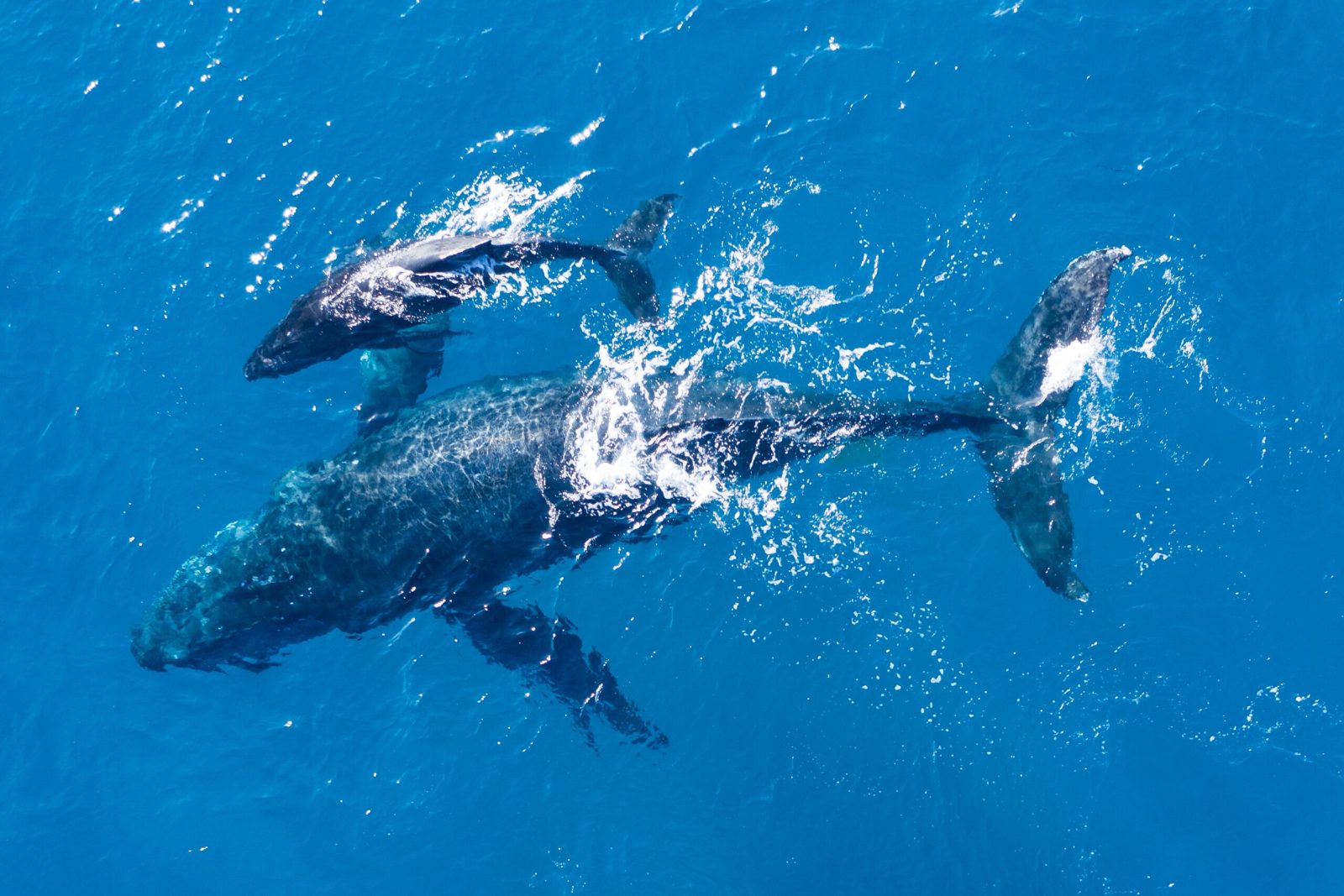
You scan the channel for the next hour, counting blows, watching a mother and calf drift in tandem near the reef line. The hydrophone speaker crackles with the eerie, modulated song of a distant male — rising whistles and guttural moans that repeat in a pattern the naturalist has tracked for three weeks. On the return passage, a competitive group of four males jostles for position beside a female, their bodies rolling and colliding in a slow-motion chase that churns the surface white. You photograph the flukes as they dive, each one distinct in its scars and pigmentation patterns, knowing those images will be cataloged in the sanctuary's identification database before you reach shore.
All the details about your upcoming adventure in one place
Hawaii whale watching offers encounters with North Pacific humpback whales migrating through Hawaiian waters from December through April. Tours depart from Maui, Oahu, and the Big Island, providing access to shallow coastal channels where whales breach, tail-slap, and nurse calves. Hawaii whale watching tours include certified naturalist guides and hydrophones to listen to whale songs beneath the surface.
Each winter, more than 10,000 North Pacific humpback whales migrate 3,000 miles from Alaskan feeding grounds to the warm, shallow waters surrounding the Hawaiian Islands.
The Hawaiian Islands Humpback Whale National Marine Sanctuary, established in 1992 and spanning 1,400 square miles across the archipelago, protects critical breeding and calving habitat where these 40-ton mammals perform aerial displays, nurse newborn calves, and sing complex songs that carry for miles underwater. The sanctuary encompasses coastal waters off Maui, Oahu, and the Big Island, with the highest concentrations observed in the Auau Channel between Maui and Lanai, where depths range from 200 to 600 feet and sheltered conditions allow mothers to teach calves essential survival skills before the northward journey in spring.
Hawaii whale watching has evolved from opportunistic shoreline sightings into a coordinated seasonal industry guided by NOAA research and vessel regulations. Federal law mandates a 100-yard minimum distance between boats and whales, though breaching animals often surface closer, creating dramatic encounters that unfold without human interference. The sanctuary's education centers on Maui and Oahu offer real-time sighting data, hydrophone recordings, and fluke identification databases that track individual whales across decades. Researchers have documented site fidelity patterns, with some females returning to the same calving grounds for more than twenty years. Peak activity occurs from January through March, when competitive male groups chase receptive females and calves practice breaching in shallow bays.
The islands' volcanic topography shapes whale behavior in measurable ways. Steep underwater drop-offs create nutrient upwellings that support the krill populations sustaining whales during their months-long fast, while lava rock peninsulas form natural amphitheaters where whale songs reverberate. Shore-based viewing from spots like Makapuu Lighthouse on Oahu and the Kohala Coast on the Big Island requires no fees and often yields sightings comparable to boat tours, particularly during morning hours when surface conditions remain calm and whales engage in social behaviors close to shore. The sanctuary coordinates an annual Ocean Count citizen science project each February, during which volunteers stationed at shoreline sites tally breaches, tail slaps, and blows across a synchronized four-hour window, generating population trend data that informs conservation policy throughout the North Pacific.

More than 10,000 humpback whales migrate 3,000 miles each winter to Hawaiian waters, where federal sanctuary protections ensure encounters unfold without human interference.
Casual beach attire is appropriate for hawaii whale watching. Bring a light jacket or windbreaker as sea breezes can be cool even in tropical climates.
Small daypacks are generally allowed on most hawaii whale watching tours. Security protocols may vary by private vessel operator.
Photography is encouraged during your hawaii whale watching excursion. Using a zoom lens is recommended to maintain the required 100-yard distance from whales.
Families are welcome, though children should be supervised closely near the water. Educational exhibits make this a suitable activity for all ages.
The Kīhei visitor center provides accessible ramps and ADA-compliant facilities. Accessible boat tours for hawaii whale watching should be booked directly with specialized operators.
Water and light snacks are recommended for your trip. Consumption of food on board depends on your specific boat tour operator.
Hours
09:30–14:30
Address
Hawaiian Islands National Marine Sanctuary, Hawaii, USA
Accessibility
Accessible ramps and ADA compliant facilities
Best arrival
07:00–11:00
Official site
https://hawaiihumpbackwhale.noaa.gov
Car · 45 min from Kahului · Varies
Rental cars provide the most flexibility for accessing various shoreline viewpoints. Parking is available at the sanctuary headquarters.
Taxi · 45 min from Kahului · Moderate
Ride-shares and taxis are available from major island hubs. Confirm return transport in advance.
Entry to view whales from public shorelines is 0 USD. For organized hawaii whale watching tours, most operators provide a full refund if canceled within their specific window, often 48 hours prior.
Recommended time
3-4 hours
To experience hawaii whale watching effectively, plan for a morning session when ocean surface conditions are generally calmer. These hawaii whale watching tours allow ample time for spotting humpback behavior from the shoreline or via boat. Since there are no hawaii whale watching tickets required for public beach viewing, crowds remain fluid throughout the day, though coastal vantage points are most accessible during the recommended arrival window. You should allocate extra time if you intend to use binoculars to scan the horizon for marine mammal activity.
Crowd levels through the day
Weather · crowds · average price — dots go green to amber to red as each metric rises.
The peak season for observing humpbacks is January through March. Expect high activity and frequent surface behaviors like breaching.
Activity continues through April with warmer temperatures. It is an excellent time for sightings before the whales migrate back to Alaska.
Sanctuary programs transition as the environment prepares for the winter migration. Some early arrivals may be spotted in late November.
Focus on land-based exhibits and marine education as whales are generally absent from Hawaiian waters.
View the annual whale count data to understand sighting trends. This community-led program provides valuable insights for enthusiasts.
The best arrival window is 07:00–11:00 for optimal viewing. Ocean conditions are typically much calmer during these morning hours.
Inquire if your boat tour includes hydrophone access. Listening to whale songs adds a unique dimension to your hawaii whale watching experience.
Ocean breezes can be brisk even in Hawaii. A light jacket is useful during boat excursions.
Always maintain a 100-yard distance from whales. Federal laws protect these animals and ensure respectful interaction.
The story of hawaii whale watching begins not with tourism but with near-extinction. Commercial whaling decimated North Pacific humpback populations throughout the nineteenth century, with American vessels hunting these giants across Hawaiian waters until the 1960s. By 1966, when the International Whaling Commission finally granted humpbacks full protection, fewer than 1,400 individuals remained in the entire North Pacific. Hawaiian waters, once thick with whales each winter, had grown silent. Recovery accelerated after the Marine Mammal Protection Act passed in 1972, prohibiting harassment of cetaceans in U.S. waters. Scientists began systematic surveys of Hawaiian breeding grounds in the late 1970s, documenting the whales' return to Maui's sheltered channels and the shallow banks off Molokai. In 1992, Congress established the Hawaiian Islands Humpback Whale National Marine Sanctuary, protecting 1,400 square miles of critical habitat across the archipelago. The sanctuary formalized vessel approach limits—100 yards became law—and funded long-term population monitoring. Local communities, many descended from whalers, embraced conservation as hawaii whale watching tours emerged as an economic alternative to extraction. By 2006, North Pacific humpback numbers exceeded 10,000, prompting NOAA to propose downlisting the population from endangered to threatened status. That shift became official in 2016, marking one of the most successful marine mammal recoveries on record. Today, researchers estimate 12,000 humpbacks migrate to Hawaiian waters each winter, transforming whale watching into a cornerstone of the state's ecotourism economy. The sanctuary continues to balance access with protection, requiring commercial operators to carry naturalists and maintain strict distance protocols. What began as a story of collapse has become a testament to sustained regulatory commitment and the resilience of species given room to recover.
American commercial whalers hunted humpbacks across Hawaiian waters, driving the North Pacific population toward extinction.
International Whaling Commission granted humpback whales full protection after populations collapsed below 1,400 individuals.
Marine Mammal Protection Act prohibited harassment of whales in U.S. waters, enabling systematic population recovery.
Congress established the Hawaiian Islands Humpback Whale National Marine Sanctuary, protecting 1,400 square miles of critical breeding habitat.
North Pacific humpback population exceeded 10,000, prompting NOAA to propose downlisting from endangered status.
Humpback whales officially downlisted to threatened status, marking one of the most successful marine mammal recoveries in history.
Planning a trip for hawaii whale watching requires patience and preparation to keep young observers comfortable along the coast. Engaging in this natural experience offers families a chance to spot humpback whales from public shorelines while enjoying the island breeze.
Select paved coastal paths near the sanctuary to ensure your wheels can navigate the terrain easily during hawaii whale watching tours.
Public shorelines often lack specialized baby-change stations, so parents should pack a portable changing mat and dispose of waste responsibly away from the water. Planning ahead for these hawaii whale watching tickets alternatives is essential when traveling with infants.
Young children benefit from frequent breaks, so plan for short observation blocks followed by time at nearby playgrounds to prevent restlessness during your hawaii whale watching tour.
Bring plenty of hydration and non-perishable snacks, as amenities near prime viewing spots can be limited or require a significant walk. Secure trash items tightly to protect the marine ecosystem.
Real experiences from real travelers
We saw seven humpback whales during our three-hour morning tour from Lahaina Harbor. The crew was knowledgeable about migration patterns and kept a respectful distance while the whales swam closer on their own. Water was calm and visibility excellent in late August.
Boarded at sunrise from Maalaea and spotted a mother with her calf within twenty minutes. The captain cut the engines and we drifted while they surfaced repeatedly. Hydrophone let us hear the whale songs underwater. Brought a light jacket as recommended.
Hawaii whale watching tours from Kauai delivered five full breaches and countless tail slaps. Guide explained the difference between competitive pod behavior and resting patterns. Seas were moderate with some spray on the bow.
Shared catamaran with about forty other passengers made photography challenging. We did see whales but the boat felt packed during peak viewing moments. Crew handled it professionally and rotated positions so everyone got time at the rail.
Naturalist on board provided context about humpback migration from Alaska to Hawaiian breeding grounds. We observed pec slapping and heard vocalizations through the hydrophone system. Seas were glassy calm off the Kona coast.
A curious juvenile approached our vessel and surfaced within ten meters multiple times. Captain maintained position and let the whale control the interaction. The experience of watching a forty-foot animal that close was humbling. Morning departure meant less wind.
February timing meant we saw competitive pods with multiple males pursuing a female. The action included breaching, tail throws, and aggressive surface behavior. Our hawaii whale watching ticket included underwater footage shown on screens below deck.
Departed from Honokohau Harbor and traveled north along the Kona coast where we found a resting pod of five adults. The whales stayed near the surface for nearly an hour allowing extended observation. Water temperature was comfortable enough to stay on the open deck throughout.
Booked a smaller rigid-hull inflatable for our family of four and appreciated the lower profile for viewing and photography. Captain positioned us perfectly for a double breach. Saw spinner dolphins as a bonus on the return trip.
Traveled in early November expecting fewer sightings but encountered an early arrival pod near Maui. The whales were active with tail slapping and spy hopping behavior. Crew mentioned this was unusually early in the season but provided excellent viewing regardless.
Everything you need to know for your journey
Entrance to view whales from public shorelines is 0 USD, but private hawaii whale watching tours require tickets.
The visitor center is open 09:30–14:30, Monday through Friday.
Free entry to view whales from public shorelines is 0 USD, though private boat tours charge a fee.
Yes, shore spotting is a popular activity when whale activity is higher in the morning.
The best arrival window for your hawaii whale watching tour is 07:00–11:00 when conditions are calmest.
Yes, families are welcome on most excursions, but please verify with your specific boat operator.
Yes, the sanctuary center is ADA compliant with ramps and accessible bathrooms.
Bring binoculars, a camera with zoom, and a light jacket for your hawaii whale watching excursion.
Stay at least 100 yards away and observe respectfully as these animals are protected.
Vast volcanic landscape with high-altitude views.
Premier aquarium showcasing local marine life.
Coastal wetland habitat for migratory birds.
Renowned sandy coastline with swimming areas.
Convenient access to the sanctuary and beaches.
Upscale coastal lodging with ocean views.
Practical stay near the airport and transit.
Join thousands of happy travelers who have discovered this incredible experience
Book Your Experience Now