

Quick answer
Whale watching boats in Hawaii operate daily from 07:00 to 18:00 across island harbors, with no single gate fee—each private operator sets its own pricing. Morning departures between 07:00 and 10:00 offer calmer seas and better visibility, as afternoon trade winds often roughen the channel and push whales into deeper water. The humpback season runs mid-December through April, peaking in February and March when mothers with calves concentrate in shallow bays.
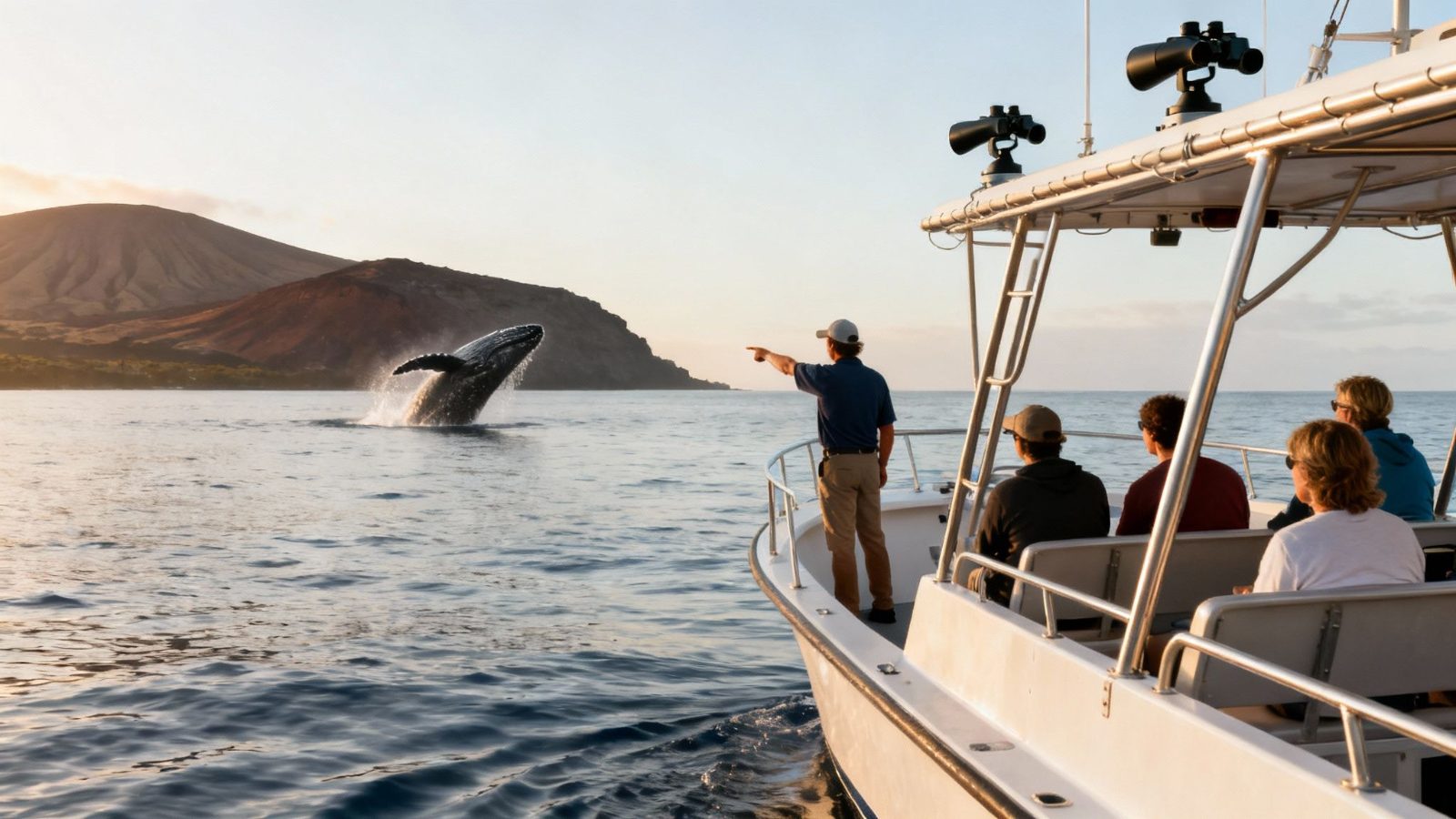
Humpback whales travel more than 3,000 miles from Alaskan feeding grounds to breed and calve in Hawaii's protected channels, where federal law mandates a 100-yard buffer between vessels and animals. A hawaii whale watching boat adheres to these boundaries while positioning passengers within sight and sound of breaches, tail slaps, and the resonant calls that carry through hull microphones. The vessels themselves range from rigid-hull inflatables seating twelve to 65-foot catamarans accommodating 150, each with trade-offs in speed, stability, and proximity. Departure harbors cluster around known congregation zones: Lahaina and Maalaea on Maui, Honokohau on the Big Island, Nawiliwili on Kauai, and Waianae on Oahu's leeward coast. No centralized ticketing exists—operators contract directly with passengers, and schedules shift with swell forecasts and sighting reports radioed between captains. Morning slots fill earliest because wind patterns favor the first three hours after sunrise, when glassy conditions let hydrophones detect whales before they surface. Vessel choice hinges on tolerance for motion and group size. Inflatables plane across chop and maneuver quickly when a whale sounds nearby, but offer no shade and drench passengers in spray. Large catamarans stabilize in swell and carry restrooms, yet their draft keeps them farther offshore. Mid-sized monohulls split the difference, threading the channel between speed and comfort. Certification under Coast Guard passenger-vessel standards is universal, but crew expertise in reading whale behavior—recognizing a pre-breach arch or the silence before a breach—varies widely and determines how much of the two- to three-hour window is spent watching versus transiting. Whale watching tour boats leave from harbors with no admission gates, so access depends entirely on booking a licensed operator in advance. Walk-up availability exists during shoulder weeks in early December or late April, but February and March require reservations days ahead. Operators provide life jackets, and most supply light snacks, but seasickness medication and reef-safe sunscreen remain the passenger's responsibility. The return to harbor typically coincides with the midday wind shift, when the next departure wave begins its cycle.
“Federal law mandates a 100-yard buffer between vessels and humpback whales, but breaches and tail slaps often close that distance on the animal's terms.”
Best Time for Hawaii Whale Watching Boat Excursions
Humpback whale season in Hawaii typically spans from December through April, with peak activity occurring between February and March. For daily excursions, the best arrival window is 07:00–10:00, as calmer morning waters improve visibility for spotting.
Peak Season (Feb–Mar)
High demand, book well in advance70°F–80°F, high activity levels
Whales are most active during these months, making sightings frequent.
Early Season (Dec–Jan)
Moderate crowds70°F–78°F, building activity
Arrivals begin as whales migrate from Alaska to Hawaiian waters.
Late Season (April)
Lower demand72°F–82°F, declining activity
Whales begin their return migration, though sightings remain possible.
Weekday Mornings
Minimal crowds—
Calmer morning waters provide better visibility for whale spotting.
Verdict: The optimal time for whale watching is February or March, arriving at the harbor between 07:00–10:00.
Operating Hours for Hawaii Whale Watching Boat Tours
Whale watching boat tours across the Hawaiian Islands operate daily throughout the week. These hours reflect standard availability across various harbor locations.
| Monday | 07:00–18:00 | |
|---|---|---|
| Tuesday | 07:00–18:00 | |
| Wednesday | 07:00–18:00 | |
| Thursday | 07:00–18:00 | |
| Friday | 07:00–18:00 | |
| Saturday | 07:00–18:00 | |
| Sunday | 07:00–18:00 |
Understanding Hawaii Whale Watching Boat Costs and Fees
There is no public gate or universal entrance fee for whale watching in the Hawaiian Islands. Costs are determined entirely by individual private tour operators based on their specific vessel and service offerings.
A typical adult pays the rate set by the private tour operator, which varies based on the duration and type of vessel selected.
Getting to Your Hawaii Whale Watching Boat Departure Point
Whale watching departures occur from various harbors across the Hawaiian Islands, most commonly accessible via rental car or taxi. Navigating to these points requires planning for harbor-specific parking areas located near the docks.
Rental vehicle via HI-30 to Lahaina Harbor
Maui Bus Route 28 to Wharf Cinema Center
Direct service to Kewalo Basin Harbor
Guidelines for a Hawaii Whale Watching Boat Experience
Federal law requires vessels to stay at least 100 yards from humpback whales in Hawaiian waters. Respectful conduct protects these marine mammals and ensures safe, legal encounters for all passengers.
Do
- Stay seated when the captain instructs during whale approaches
- Keep voices low to avoid startling nearby whales
- Follow crew directions for moving around the boat
- Report sightings calmly to the crew without pointing or shouting
- Secure loose items that could blow overboard near wildlife
Don't
- Don't lean over railings or extend arms toward whales
- Don't use flash photography when whales surface nearby
- Don't throw anything into the water during the tour
- Don't encourage the captain to move closer than legal limits
- Don't apply sunscreen just before boarding to minimize ocean contamination
Hawaii Whale Watching Boat Trip Preparation Checklist
Pack strategically for a comfortable morning on the water.
-
Book your tour in advance — Operators fill quickly during peak whale season (December–April).
-
Bring motion sickness medication — Take it 30–60 minutes before departure if you're prone to seasickness.
-
Pack reef-safe sunscreen and a hat — Hawaiian sun reflects intensely off open water.
-
Wear layered clothing — Morning air is cool; temperatures rise as the sun climbs.
-
Bring binoculars and a camera — Whales may surface at a distance; zoom lenses capture breaches.
-
Carry a light waterproof jacket — Sea spray and wind chill are common on moving boats.
-
Bring water and light snacks — Most tours provide refreshments, but personal hydration helps prevent nausea.
Check availability
Frequently asked questions about Hawaii whale watching boat tours
Everything you need to know about hawaii whale watching boat